Metabolic research
Retatrutide in Canada: Understanding the Clinical Evidence Behind an Investigational Triple-Hormone Receptor Agonist
- Publication type
- Consumer research brief
- Jurisdiction
- Canada
- Regulatory reference
- Health Canada
- Evidence base
- Phase 2 and Phase 3 trial data
What the Phase 2 and Phase 3 trials report on retatrutide, the investigational GLP-1 / GIP / glucagon triple agonist: weight, HbA1c and liver-fat results, known side effects, and where it stands with Health Canada.
24.2%
Mean weight reduction, 12 mg, 48 weeks (Phase 2)
≈2.2 pts
Largest HbA1c reduction in the Phase 2 diabetes trial
≈86%
Relative liver-fat reduction, 12 mg (Phase 2a)
≈28.3%
TRIUMPH-1 topline at 80 weeks (not yet peer-reviewed)
In brief
Retatrutide (LY3437943) is an investigational once-weekly injectable peptide and the first molecule designed to activate three hormone receptors at the same time: GLP-1, GIP and glucagon. That is why it is described as a triple-hormone receptor agonist.
Retatrutide has not been authorised by Health Canada for sale or use as a treatment for any condition. Everything below comes from published clinical trials and registered trial results.
Three findings stand out in the research so far: a mean weight reduction of 24.2% at 48 weeks on the 12 mg dose in the Phase 2 obesity trial (versus 2.1% on placebo) [1], an HbA1c reduction of roughly 2.2 percentage points in the Phase 2 diabetes trial [2], and large reductions in liver fat in a Phase 2a substudy [3]. This brief covers those results, the side effects seen so far, and what still has to happen before any approval in Canada.
Why researchers are paying attention
Obesity affects about 26.8% of Canadian adults, and another 36.3% are classified as overweight, according to the Public Health Agency of Canada [4]. It is linked to type 2 diabetes, heart disease, fatty liver disease, sleep apnoea and osteoarthritis.
GLP-1 based medicines such as semaglutide and tirzepatide changed the field, with trial weight losses in the range of 15–22%. Retatrutide is being studied as a possible next step: one molecule working on three hormonal pathways instead of one or two.
It is important to separate what trials show from what has been reviewed and authorised. Retatrutide is not available through Canadian pharmacies as an approved treatment. This brief is educational: what the science says, what it doesn't yet say, and what regulatory steps remain.
How retatrutide works
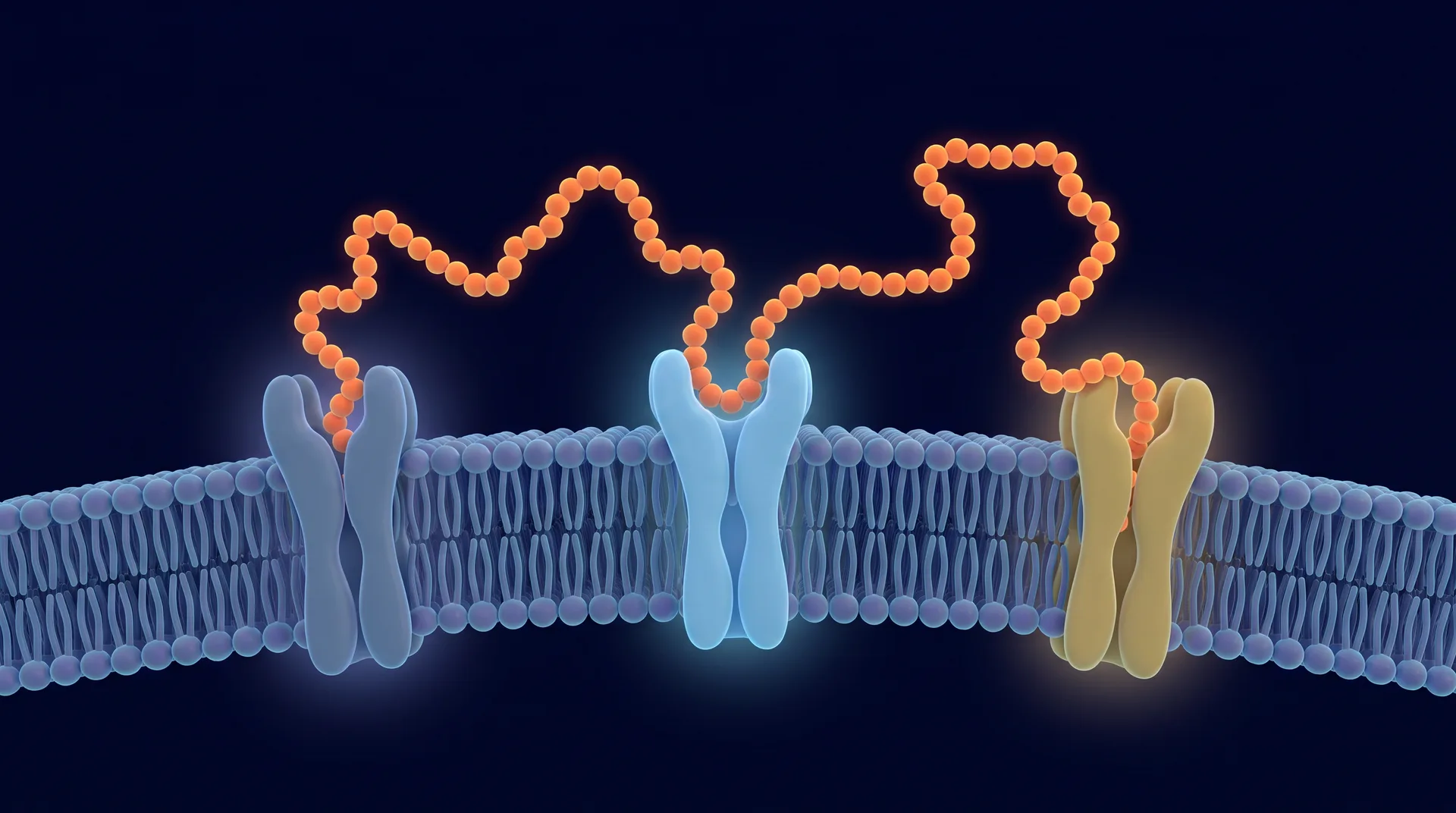
GLP-1
Appetite & insulin
GIP
Insulin & fat metabolism
Glucagon
Energy use & liver fat
The three receptor targets
- GLP-1: a gut hormone released after meals. It raises insulin only when blood sugar is high, lowers glucagon, slows stomach emptying and signals fullness to the brain. It is the main pathway behind semaglutide and tirzepatide, both authorised in Canada.
- GIP: another gut hormone that boosts insulin after meals and may influence fat metabolism and energy balance. It is part of how tirzepatide works and is thought to complement GLP-1.
- Glucagon (GCG): a pancreatic hormone that releases stored sugar from the liver. At the measured level of activation retatrutide is designed for, it is thought to raise energy use, increase fat burning and reduce liver fat. Researchers see it as the main thing setting retatrutide apart [1, 3].
Why combine all three?
GLP-1 and GIP mainly reduce appetite and improve blood-sugar control, while glucagon adds higher energy expenditure and fat release from the liver. The hypothesis is that together they may go further than single or dual agonists [1, 5]. Retatrutide is a single engineered molecule, not a mix of drugs, given as one injection a week.
What the clinical trials found
These results come from Phase 2 and Phase 3 trials run under regulatory oversight. Trials show whether a drug is promising; they are not an approval. Health Canada has not completed a review of retatrutide.
Phase 2 obesity trial (Jastreboff et al., NEJM, 2023)
This trial followed 338 adults with obesity or overweight, without type 2 diabetes, in the United States for 48 weeks. Participants took 1, 4, 8 or 12 mg once a week, or placebo [1]. Reported mean weight reductions:
- 1 mg: about 8.7%
- 4 mg: about 17.5% (reported at 24 weeks)
- 8 mg: about 22.8% at 48 weeks
- 12 mg: 24.2% at 48 weeks
- Placebo: 2.1% at 48 weeks [1]
Phase 2 obesity trial [1]
Mean weight reduction at 48 weeks
For a 100 kg (about 220 lb) person, 24.2% would be roughly 24 kg (about 53 lb) over around 11 months. Every participant on 8 mg and 12 mg lost at least 5% of body weight, and many on the higher doses lost 20% or more, a level previously linked mostly to bariatric surgery [1].
The trial also reported smaller waistlines, lower systolic blood pressure (up to 14.0 mmHg on 12 mg), better non-HDL cholesterol and triglycerides, and lower hs-CRP, a marker of inflammation [1]. These were secondary measures, but they suggest broader metabolic improvement alongside the weight loss.
Phase 2 type 2 diabetes trial (Rosenstock et al., The Lancet, 2023)
This 36-week trial included 281 adults with type 2 diabetes (average HbA1c 8.3%, average BMI 35.0). Doses ranged from 0.5 to 12 mg, compared with dulaglutide 1.5 mg and placebo [2].
- Retatrutide, highest dose: HbA1c down about 2.2 percentage points
- Dulaglutide: down about 1.4 points
- Placebo: down about 0.3 points [2]
Guidelines generally treat a 1.0–1.5 point drop as meaningful, so this outperformed an established weekly GLP-1 medicine in the same trial. The highest dose also produced about 16.9% weight loss at 36 weeks, compared with about 2.0% on dulaglutide and 3.0% on placebo, notable because weight loss is usually harder with type 2 diabetes. No severe low blood sugar events or deaths were reported [2].
Liver-fat substudy (Hartman et al., Nature Medicine, 2024)
A substudy looked at participants from the obesity trial who had MASLD (formerly called NAFLD) with at least 10% liver fat at the start [3].
- 8 mg: liver fat down about 82% at 48 weeks, with 89% reaching normal levels (under 5%)
- 12 mg: liver fat down about 86% at 48 weeks, with 93% reaching normal levels [3]
For comparison, even intensive lifestyle programmes typically normalise liver fat in about 64% of people over a similar period [3]. MASLD affects an estimated 20–25% of Canadian adults and has few proven drug options. A Phase 3 MASLD/MASH trial is under way, with results expected in 2026 [6].
Phase 3 TRIUMPH programme
TRIUMPH is the largest evaluation of retatrutide so far, covering obesity, type 2 diabetes, sleep apnoea, knee osteoarthritis and cardiovascular outcomes [6]. Topline results for TRIUMPH-1 (May 2026) and TRIUMPH-2 and -3 (July 2026) continued the trend: on 12 mg in people without diabetes, mean weight reduction was about 28.3% at 80 weeks, and 65.3% of participants reached a BMI under 30 [7, 8].
These Phase 3 numbers were announced by Eli Lilly in press releases and were not yet fully peer-reviewed when this brief was written. Treat them as early signals, not established fact.
A 10 mg vial is a strength, not a dose
A vial's strength tells you how much peptide is in it. It does not correspond to any dose tested or shown to be safe or effective. The Phase 2 trials studied 0.5–12 mg weekly [1, 2], and TRIUMPH mainly studies 4, 9 and 12 mg [6, 7, 8]. None used 10 mg as a treatment dose, so reading a "10 mg vial" as a recommended amount would be scientifically wrong.
Regulatory status in Canada
Not authorised for sale
Retatrutide has not gone through Health Canada's New Drug Submission review, and no Notice of Compliance has been issued [4, 9]. Approval would require the sponsor, Eli Lilly, to submit all trial, preclinical and manufacturing data for independent review of benefits and risks for Canadians. That has not happened yet.
What "investigational" means
Under Part C, Division 5 of Canada's Food and Drug Regulations, an investigational drug can only be sold or imported for a clinical trial reviewed by Health Canada [9]. Trials use set protocols, registered sites, qualified investigators and informed consent because safety and effectiveness aren't fully known. Results from that controlled setting can't automatically be applied to wider use.
Good results don't guarantee approval
Positive Phase 2 and Phase 3 data don't mean Health Canada will approve retatrutide. A review can turn up safety signals, data gaps or manufacturing issues that change the path. Promising trials are not the same as an approved treatment.
Risks and side effects
Because Health Canada hasn't completed a review, definitive contraindications have not been finalised. What is known comes from trial findings, comparisons with related approved medicines and open questions still being studied.
Gastrointestinal effects (seen in trials)
The most common side effects across retatrutide trials were digestive, in line with other GLP-1 medicines, and are thought to come mainly from slower stomach emptying [1, 2, 5]:
- Nausea: 14–60% of participants on active doses, mostly mild to moderate
- Vomiting: 3–26%
- Diarrhoea: 9–33%
- Constipation: less common, but seen across doses
- Abdominal discomfort and indigestion: in some analyses, not clearly different from placebo [1, 2, 5]
These effects were most common while the dose was being increased and tended to ease once participants stayed on a steady dose. About 6–16% of participants stopped treatment because of them, depending on dose [5].
Slower stomach emptying
Slowing how fast the stomach empties helps explain the reduced appetite, but it has other consequences too [1, 5]:
- It can change how quickly other oral medicines are absorbed, which matters most for drugs with a narrow safe range
- It can complicate anaesthesia if the usual pre-surgery fasting time isn't extended
- It adds to nausea, bloating and feeling full early
Dehydration and kidney strain
Nausea and vomiting can lead to fluid loss and low fluid intake. Dehydration can in turn affect kidney function, especially for people with existing kidney disease or those taking NSAIDs, diuretics or some blood-pressure medicines. This is a known concern across the GLP-1 class and is expected to apply to retatrutide because it shares the mechanism [5].
Low blood sugar alongside diabetes medicines
Retatrutide raises insulin only when blood sugar is high, so on its own the risk of low blood sugar should be small; no severe episodes were reported in the Phase 2 diabetes trial [2]. Combined with insulin or sulfonylureas, though, the risk rises. This is well established for GLP-1 medicines and is expected to apply here until ongoing trials confirm otherwise.
Pancreatitis (one trial case; class concern)
One case of acute pancreatitis was reported in the Phase 2 obesity trial [5]. Pancreatitis is a recognised concern for GLP-1 medicines, although scientists still debate whether the drugs cause it or whether obesity-related risk factors explain the link. The evidence so far doesn't show that retatrutide causes it, but it is being watched in Phase 3. People with a personal or family history of pancreatitis are generally excluded from the trials.
Gallbladder disease (class concern)
Fast, large weight loss is independently linked to gallstones because bile composition changes as fat is lost. Gallbladder events have also appeared in the trial records of semaglutide and tirzepatide. Phase 3 is tracking this for retatrutide, but a full picture needs the longer follow-up [6, 7, 8].
Injection-site and allergic reactions
As with any injectable peptide, redness, swelling or discomfort at the injection site can occur, and rarely a wider allergic reaction. These have been seen across the GLP-1 class, but they are not a prominent signal in retatrutide's trial record so far.
Thyroid C-cell tumours (theoretical in humans)
In long, high-dose studies in rats and mice, GLP-1 medicines were linked to more thyroid C-cell growth and medullary thyroid carcinoma (MTC), a rare thyroid cancer. Some important context:
- The finding comes from rodents, and how far it applies to human thyroid biology is still debated
- No MTC cases have been reported among retatrutide trial participants in the published record
- As a precaution, trials exclude anyone with a personal or family history of MTC or Multiple Endocrine Neoplasia type 2 (MEN-2) [1, 2, 5]
Likely contraindications (not yet final)
Based on trial exclusion criteria and the labels of related approved medicines, retatrutide's contraindications are expected to include [5]:
- A personal or family history of medullary thyroid carcinoma
- A personal or family history of MEN-2
- A history of pancreatitis
- Pregnancy and breastfeeding, since there is no safety data in these groups
These are anticipated, not finalised. Health Canada has not completed a review of retatrutide's safety data.
Safety signals at a glance
- Nausea, vomiting, diarrhoea, constipation: seen in Phase 1, 2 and 3 trials [1, 2, 5]
- Slower stomach emptying: established for the class and consistent with the mechanism [1, 5]
- Dehydration and kidney strain: class concern linked to the mechanism [5]
- Low blood sugar with other diabetes medicines: established for the class; not seen on its own [2, 5]
- Pancreatitis: one Phase 2 case; class concern [5]
- Gallbladder disease: class concern; monitored in Phase 3 [6, 7, 8]
- Allergic and injection-site reactions: class-level; not prominent so far [5]
- Thyroid C-cell tumours: rodent finding; theoretical in humans; not seen in trials [1, 2, 5]
What the evidence can't tell us yet
The retatrutide data are rigorous within their scope, but they have real limits:
- Duration: the most detailed data cover 48 weeks (Phase 2) and 80 weeks (Phase 3 topline). Effects over years, weight regain after stopping, long-term heart outcomes and long-term tolerability are still unknown.
- Who was studied: trials exclude many people, including those with certain conditions or medicines, pregnant or breastfeeding people and older adults with several health problems, so results may not apply equally to everyone.
- Doses studied: trials covered 0.5–12 mg once weekly. A 10 mg vial strength was never a primary trial arm, and trial results can't be applied to strengths that weren't studied.
- Phase 3 is preliminary: the TRIUMPH results so far are press-release toplines, not peer-reviewed papers. They point in a direction but aren't established fact.
- No direct comparisons with semaglutide or tirzepatide: the diabetes trial compared against dulaglutide only. Comparing numbers across different trials is unreliable.
- Approval is a separate process: strong trial results don't guarantee authorisation. Health Canada reviews independently and may raise new questions.
The bottom line
Retatrutide is one of the most closely watched investigational molecules in metabolic research. Its three-receptor design makes biological sense, its Phase 2 results are among the strongest reported, and early Phase 3 data suggest they hold up in larger, longer studies: 24.2% mean weight reduction at 48 weeks on 12 mg versus 2.1% on placebo [1], an HbA1c drop of about 2.2 points [2], and large reductions in liver fat [3].
It is still not authorised by Health Canada. Its safety profile looks broadly in line with other GLP-1 medicines, with no unexpected serious signals in Phase 2, but it is still being characterised in Phase 3. Contraindications aren't final, long-term data don't exist yet, and the Canadian review hasn't been completed or, as far as is publicly known, started.
Anyone interested in retatrutide, as a patient, caregiver or informed reader, should treat this as background for a conversation with a qualified healthcare provider, not as a substitute for personal medical advice.
Educational disclaimer
This article is for education and information only. It is not medical advice, a clinical recommendation or an endorsement of any product or treatment. It is based on peer-reviewed trial publications and public regulatory information available at the time of publication.
Retatrutide is an investigational drug and is not authorised by Health Canada for sale or for treating any condition in Canada. Trial results were obtained under controlled conditions and may not predict outcomes for any individual.
A 10 mg vial strength is a manufacturing specification, not a validated dose. This article gives no dosing, injection or administration guidance, and no advice on obtaining or using retatrutide. Decisions about any medication should be made with a licensed healthcare provider who knows your medical history.
Sources
- [1] Jastreboff AM, Kaplan LM, Frías JP, et al. Triple-hormone-receptor agonist retatrutide for obesity — a Phase 2 trial. New England Journal of Medicine. 2023;389(6):514–526. DOI: 10.1056/NEJMoa2301972 · PMID 37366315
- [2] Rosenstock J, Frias J, Jastreboff AM, et al. Retatrutide, a GIP, GLP-1 and glucagon receptor agonist, for people with type 2 diabetes: a randomised, double-blind, placebo and active-controlled, parallel-group, Phase 2 trial conducted in the USA. The Lancet. 2023;402(10401):529–544. DOI: 10.1016/S0140-6736(23)01053-X · PMID 37385280
- [3] Hartman ML, Sanyal AJ, Loomba R, et al. Triple hormone receptor agonist retatrutide for metabolic dysfunction-associated steatotic liver disease: a randomised Phase 2a trial. Nature Medicine. 2024. PMID 38858523 · PMC11271400
- [4] Public Health Agency of Canada. Obesity in Canada — A Whole-of-Society Approach for a Healthier Canada. Government of Canada.
- [5] Rotroff DM, Niswender KD, et al. The "Weight" for a New Agent Is Almost Over: A Commentary on the Novel Triagonist Retatrutide for Obesity. 2024. PMC11536522
- [6] ClinicalTrials.gov. A Study of Retatrutide (LY3437943) in Participants Who Have Obesity or Overweight (TRIUMPH-1). NCT05929066
- [7] Eli Lilly and Company. TRIUMPH-1 topline results press release. 21 May 2026.
- [8] Eli Lilly and Company. TRIUMPH-2 and TRIUMPH-3 topline results press release. 23 July 2026.
- [9] Health Canada. Guidance Document: Part C, Division 5 of the Food and Drug Regulations — Drugs for Clinical Trials Involving Human Subjects (GUI-0100). Government of Canada.
Clinical trial data are current as of the Phase 3 topline announcements available in July 2026. Peer-reviewed Phase 3 publications are pending.
Research-grade, third-party tested
Every Monark peptide ships with a certificate of analysis.